On the groundTripSplit Buddy
One bill, two currencies
One of you tapped a card and one of you put euro notes on the table. You can enter both, each in the money it was actually paid in.

Dinner comes to a hundred and something. One of you puts a card down for most of it. Somebody else still has euro notes from the boat and would quite like to be rid of them, so those go on the table as well, and everyone agrees that’s sorted.
The tempting thing now is to convert the cash in your head, add it to the card figure, and enter one number. Which means inventing an exchange rate at a restaurant table, at night, having had wine, and then living with it for the rest of the trip.
You don’t have to. On the who-paid step, say that several people paid. Everybody gets their own row, and each row has a currency next to the amount — dollars on the card row, euros on the cash row. Put in what each person actually handed over. That’s the whole job.
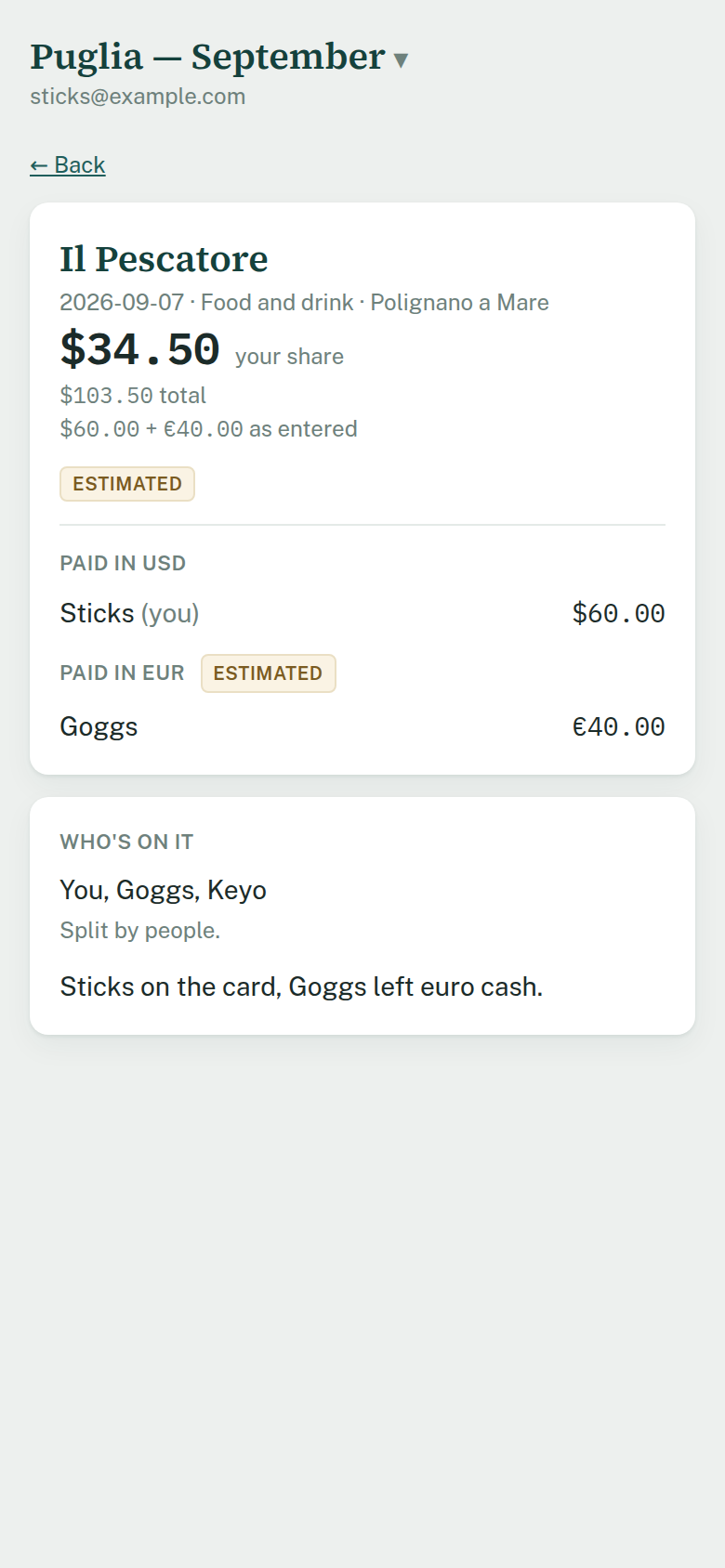
It shows up on your expenses list as one line with both figures on it, so you can see at a glance that some of this was cash.
Open it up and the two are kept apart: what was paid in dollars, what was paid in euros, with the person under each. The euro side is marked estimated, which isn’t anybody doubting the forty euros. It’s that turning forty euros into dollars takes a rate, and the rate is the app’s best guess until somebody tells it what the money really cost them.
There are coins in my lining from four countries I have no plans to revisit. Nobody is ever going to spend them and nobody is ever going to get them out. That is my contribution to international finance.